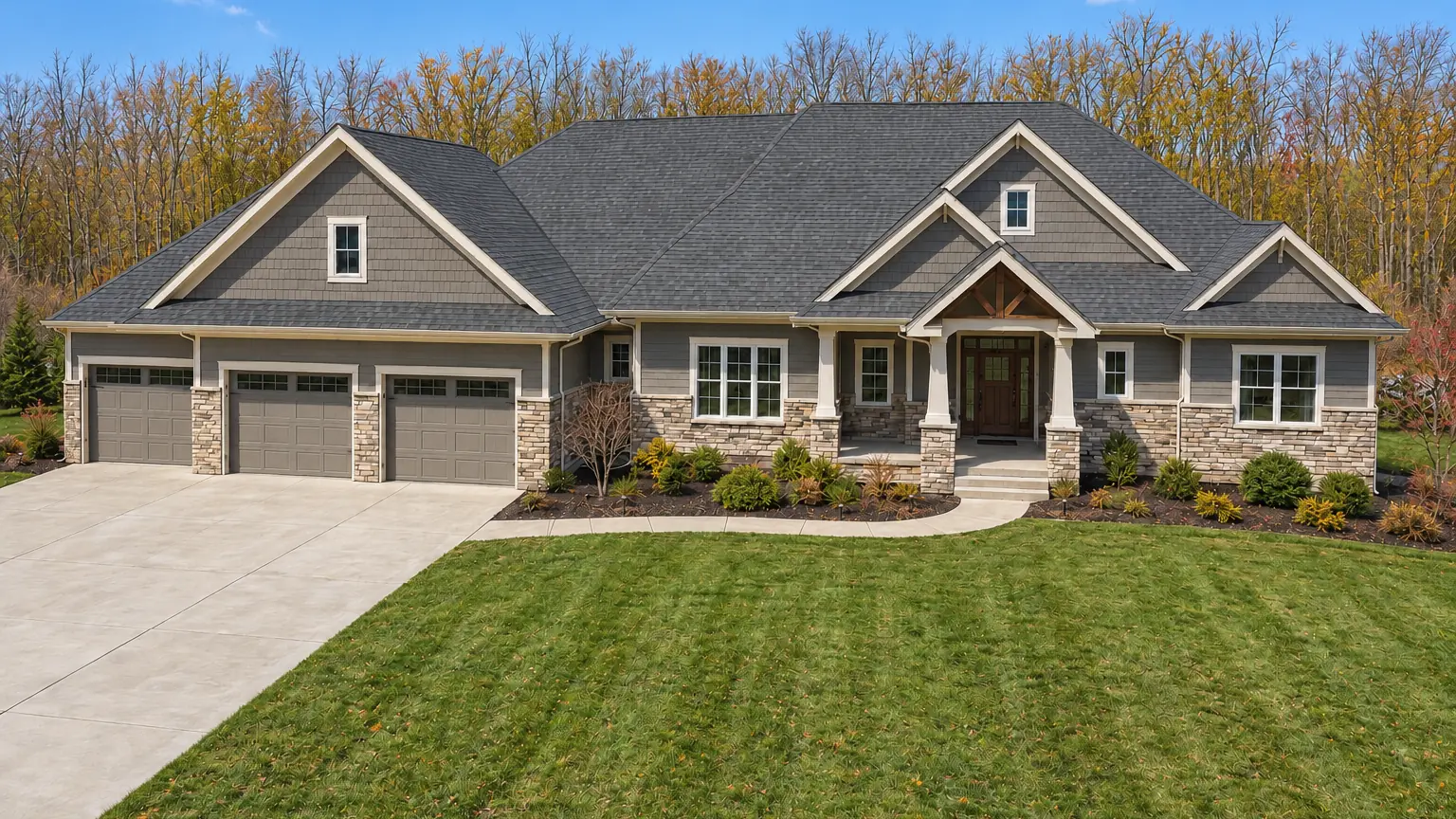
Generated photograph, not a photo of our work.
How it works
This is it at eleven in the morning
That is the house from our lighting page, same camera, same spot, in broad daylight with the system switched off. The track is up there. Most people have to be told where to look.
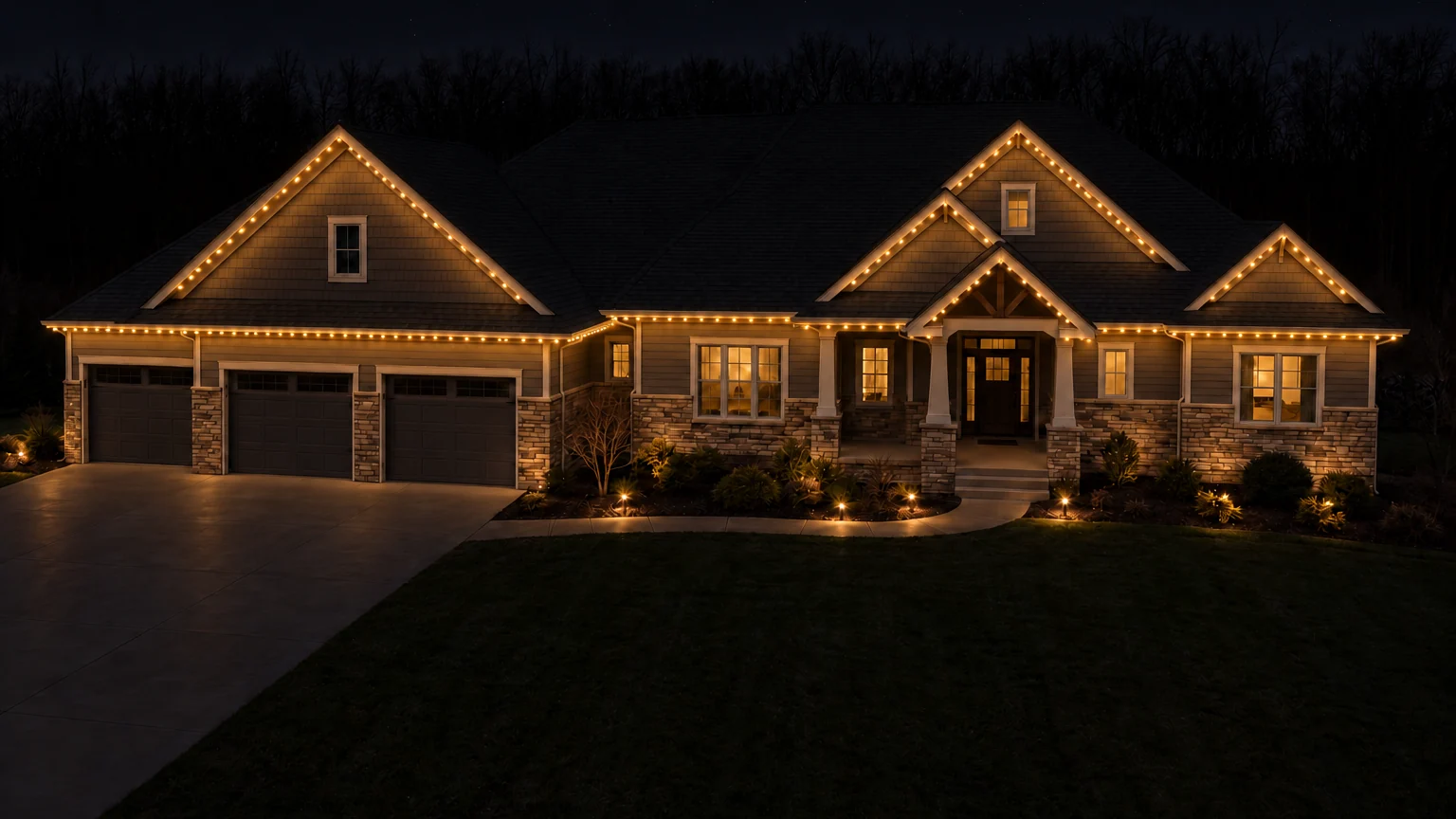
Day and night
The same house, twelve hours apart
Nothing was taken down in between. This is the honest answer to the question everybody asks first, which is whether you have to look at a lighting system on your house in June.
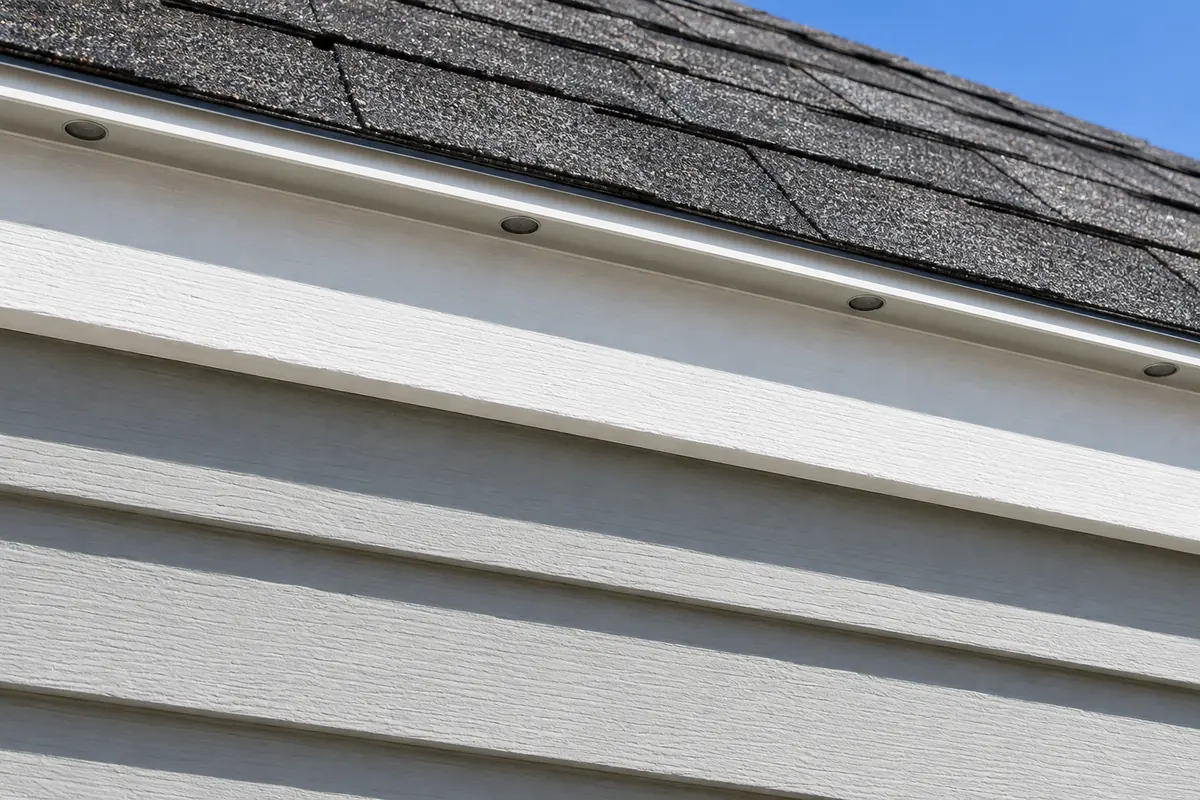
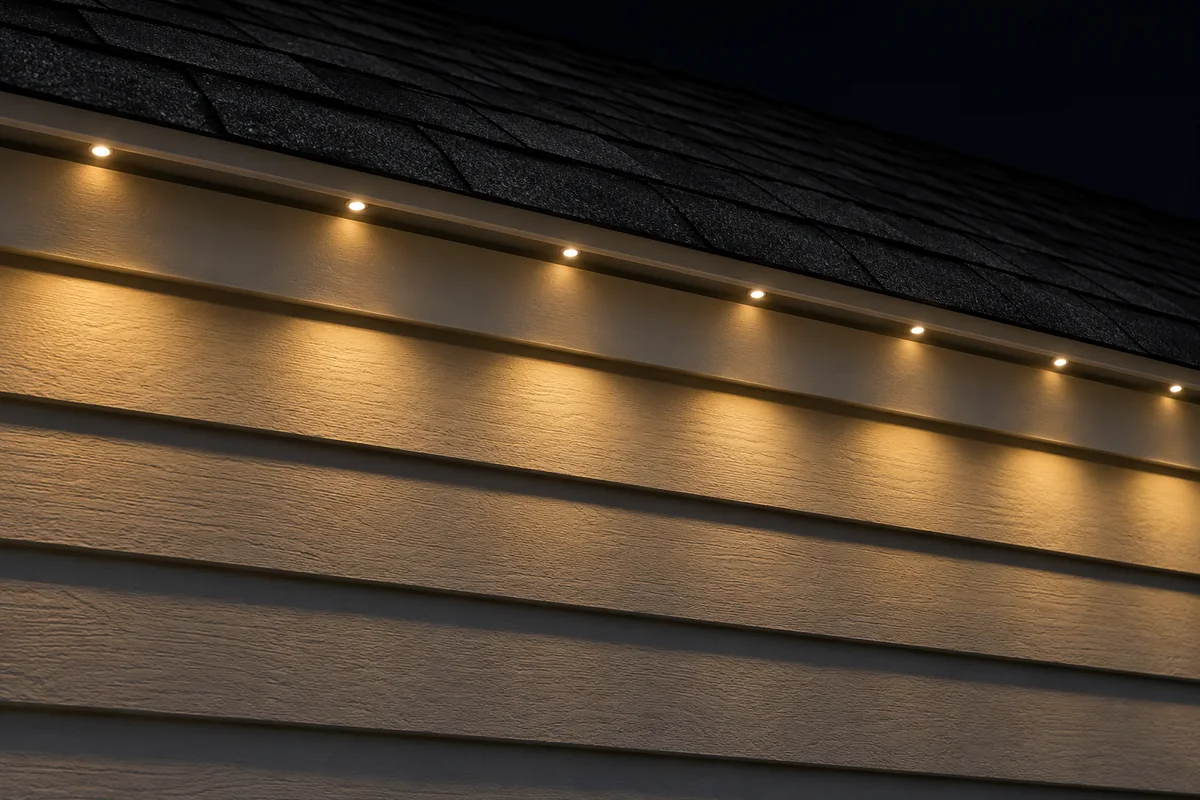
Up close
What is actually bolted to your house
An aluminium channel about an inch tall, fixed under the drip edge against the fascia, with the fixtures seated down inside it. That set back is not a detail: it is why the board stays dark and the wall takes the light.
Install day
Five things happen, in this order
Most houses are one day. A large frontage with dormers and a detached garage can run into a second.
We measure every run
Eaves, gable rakes, dormers, the porch, the garage. We mark what gets lit and what does not, and that measurement is what the written price is built from.
The channel goes up first
Three foot sections of UV coated PVC track, in the color closest to your trim, fixed up under the shingle edge against the fascia. This is the part that is still there in July, so it is the part we take time over.
The lights seat into the track
Each bulb clips into the channel and sits back behind the lip, which is why the fascia under them stays dark at night and why you see light on the wall instead of a row of glowing balls.
One power drop, one controller
A low voltage run back to a controller in the garage or on an exterior wall, on one ordinary outlet. Nothing is wired into your panel, and it runs on your wifi.
We set it up on your phone
Before we leave, the app is on your phone, the zones are named, and you have run through the scenes once with us standing there.
The hardware
Why the track matters more than the bulbs
Every line below is one Minleon publishes. What they do not state, we do not claim.
- Built for all four seasons
- Minleon manufactures these strings for four-season, year-round use, with extra insulation on the wire. They are not seasonal strands left up.
- One dead bulb does not kill the run
- A double data line means a single bad pixel will not take the rest of the string with it. It is the difference between a system and a strand of Christmas lights.
- The track is meant to disappear
- UV-coated PVC channel in white, black, brown, gray or sand, in three-foot sections, matched to your trim. You see it at night. In daylight you have to look for it.
- Mounted the way your roof needs
- Three-way track, a smart base, adjustable clips, molded clips, or magnetic Pebble strings. The roof decides, not the catalog.
- Brightness where a building needs it
- The 24-volt Pebble strings carry two RGBWs per bulb, the brightest Minleon makes, built to read from across a parking lot. That is the commercial answer.
- Warranty
- The lights are warrantied for 100,000 hours, and our labor for two years.
Before any of that
How you get a price
Tell us the address
The form below, or call (906) 291-1601. Either one reaches the same three people.
We come and measure
Rooflines, gables, dormers, the runs you want lit. Usually under an hour.
You get a written price
What is included, what it costs, and how long the install takes.
We install it once
Then it stays, and you run it from your phone.
Book a measure
Get a real number, not a guess
Lighting is priced off your actual roofline, so we come and measure it. Every house is a different length of run, a different number of gables, and a different climb. Anyone quoting you from a desk is guessing.
- We measure the roofline on site. That is the only way the number is real.
- You get the price in writing, with what it covers.
- No deposit to get a number, and no obligation after you have one.
Would rather talk? (906) 291-1601. We work across Michigan's Eastern Upper Peninsula.
